361,200 lb
Executed by Southern · Documented execution
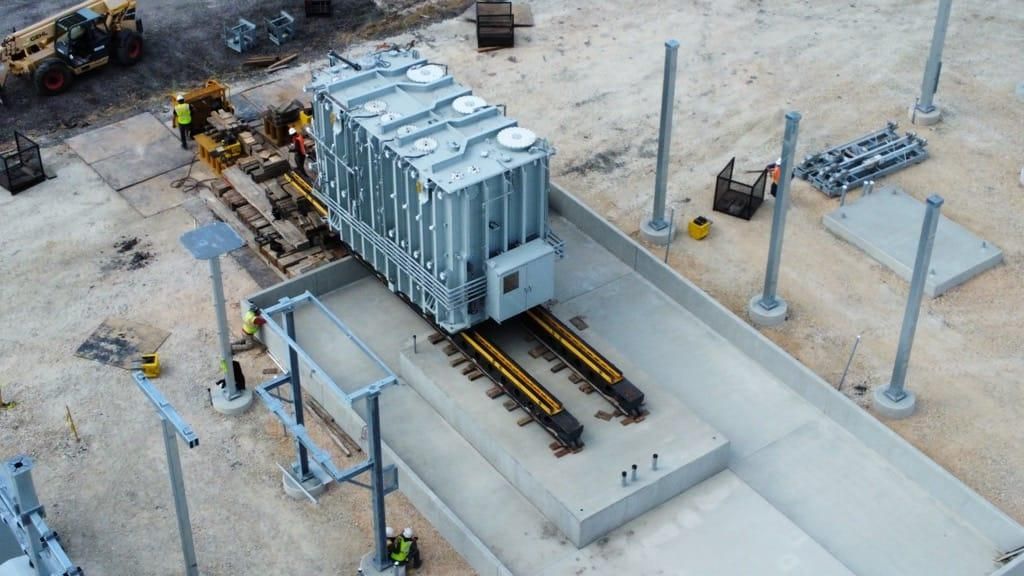
- Jack & Slide offload
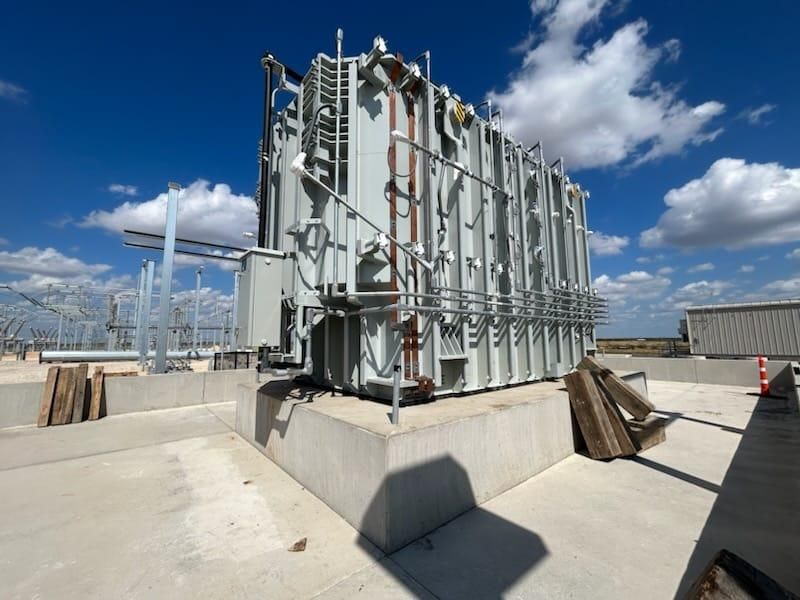
- Final placement on pad
Review the approach.
Check the receiving ground.
Southern inspected the approach to the receiving site and reviewed culverts, turning space and the path to the transformer pad with the site team.
The report called for road and ground preparation, a follow-up site assessment and a check of the receiving conditions before entering the site.
The plan developed in the field.
An engineering study required one of the drainage culverts on the access road to be replaced before any loaded transit over it.
A bridge jumper was considered to span that culvert instead. Southern ruled it out: there was not enough ground at the sides of the road to anchor its base.
The alternative reviewed at the site meeting was to transload the transformer onto a 20-axle modular combination. It was proposed by a bridge engineer who evaluates weight capacity on state bridges, and accepted by every party present.
Southern would supply the modular trailer specifications for the weight and spacing analysis, and the weight-resistance report would be issued on the project engineering side.
That alternative carried its own requirements: every culvert along the path protected with 6 in of compacted dirt and 1-3/4 in steel mats, and every turning point into the substation widened to 35 ft.
Southern then drove and assessed a different route into the site. It would keep the transformer on the truck-and-trailer combination and run over two culverts instead of the full line, with a 16 ft roadway compacted to 95% before the move — and it removed the need for the transload.
Watch the weather.
Arrive on firm ground.
The site review also required reassessment if weather changed the ground conditions before arrival.
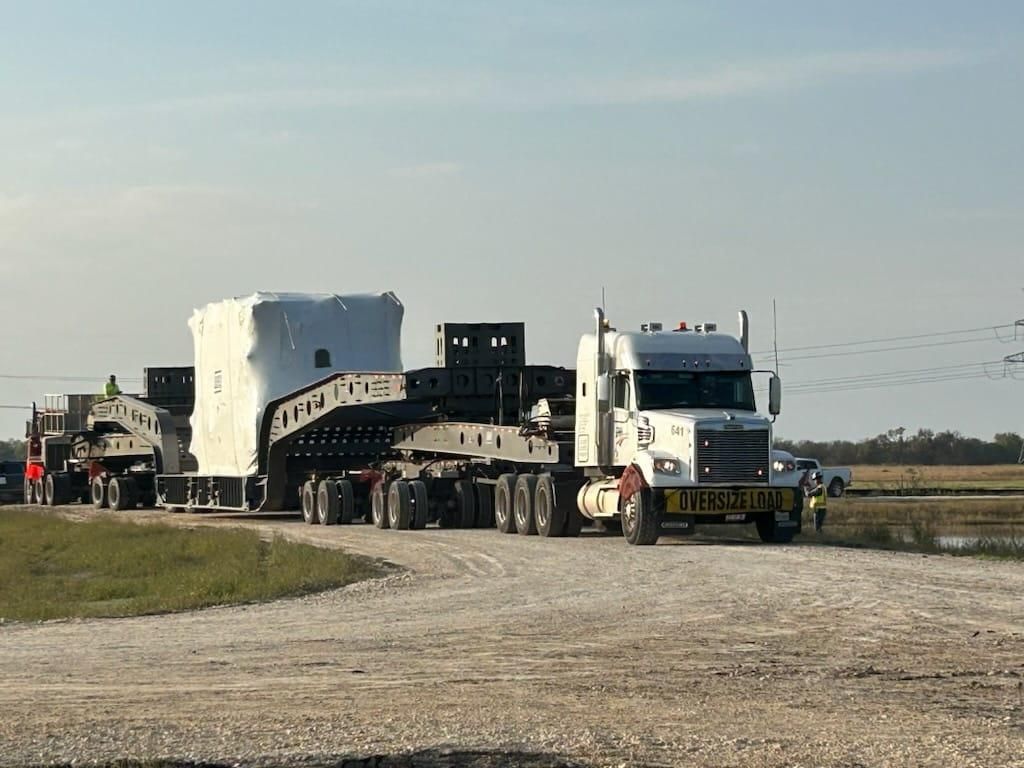
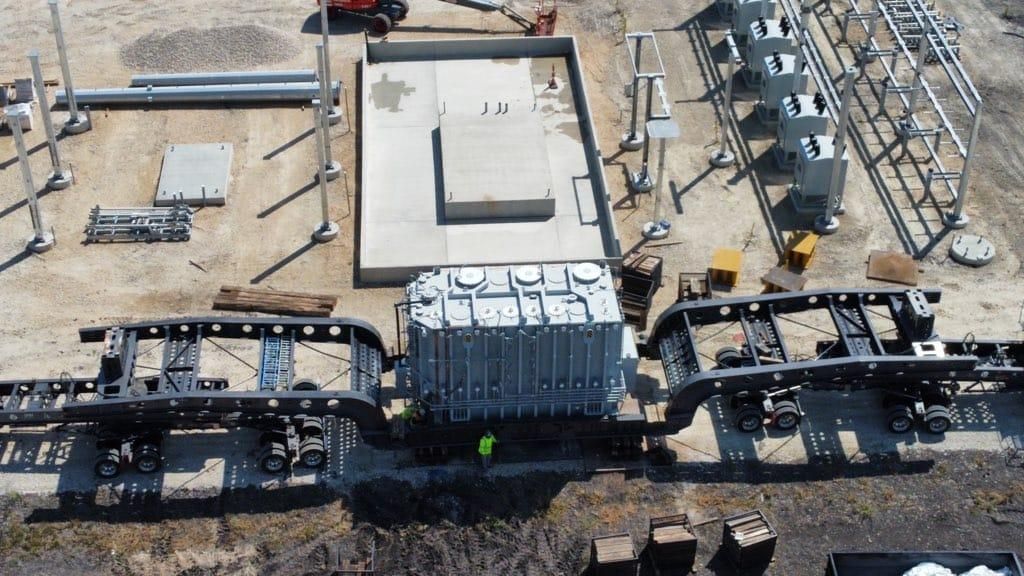
From the trailer
to the pad.