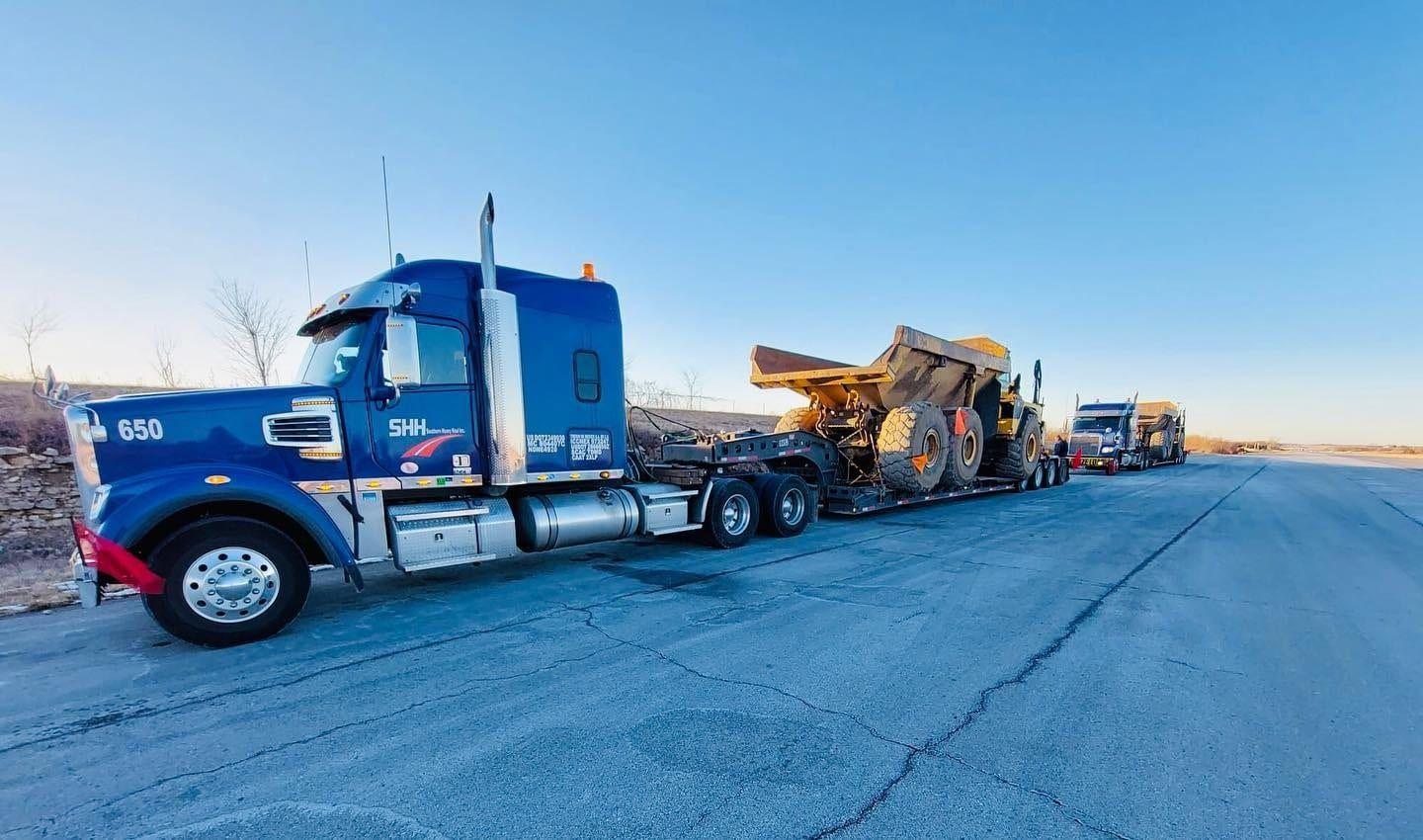
Clearances
Southern checks the loaded height and width against bridges, overhead lines, traffic signals, signs and lateral restrictions. A conflict may require a different route or coordinated work before passage.

Heavy haul · Planning & execution
Can the loaded combination reach the final position, or only the site? Southern transports oversize and overweight industrial machinery, equipment and project cargo, and plans the load, the permitted route and the final access before dispatch.
Share your load, route and delivery needs.
Power transformer · Documented site review
232,664 lb
Reaching the project area was not the same as reaching final position. Southern's review addressed the final approach, transload and Jack & Slide sequence before dispatch.
See the documented site review ↓Current drawings and photographs help establish the condition in which the equipment will travel. Three inputs guide the initial review.
Cargo weight and dimensions describe the unit. Loaded weight and dimensions describe the complete combination that must be permitted and moved.
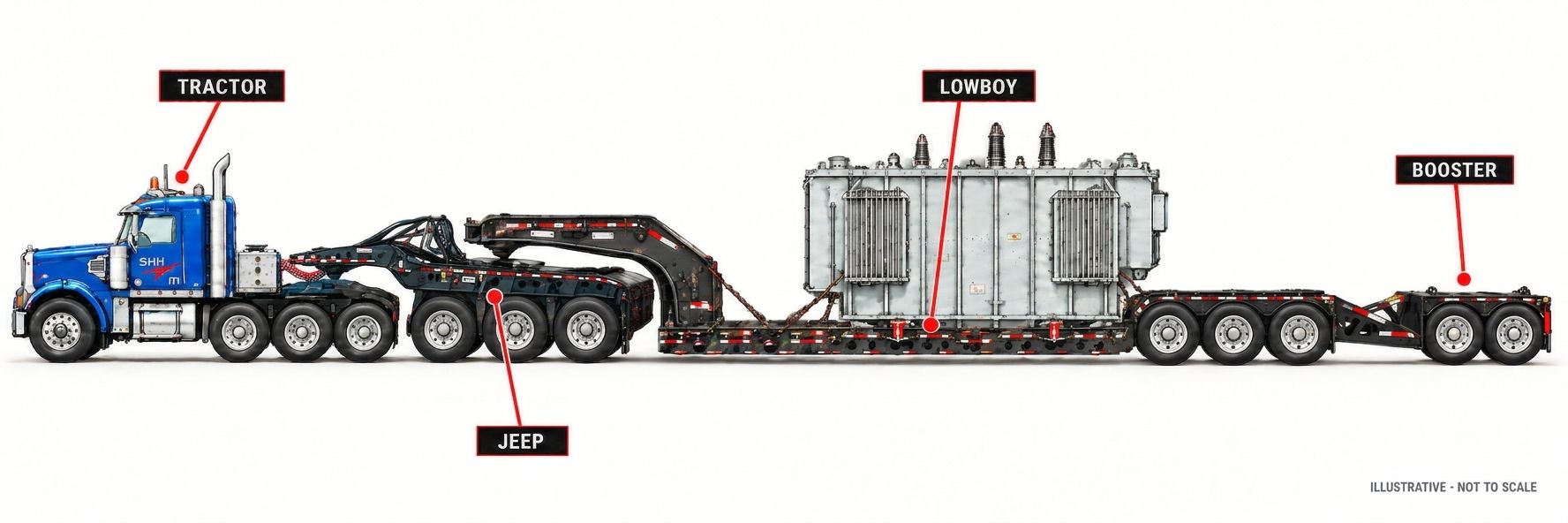
The load and route restrictions determine the trailer configuration. Southern evaluates the complete loaded combination against four constraints.
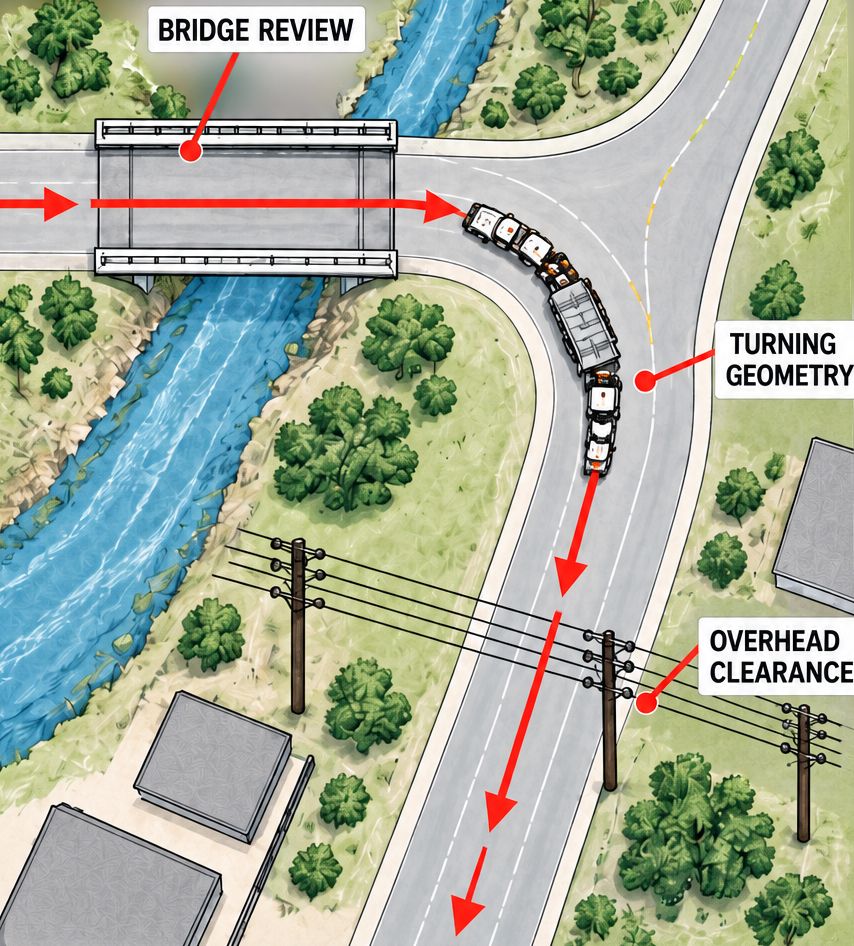
Southern checks the loaded height and width against bridges, overhead lines, traffic signals, signs and lateral restrictions. A conflict may require a different route or coordinated work before passage.
Southern checks the combination's overall length and articulation through intersections, curves, grades and roadway transitions.
Southern checks total loaded weight, axle loads and axle spacing against bridge restrictions and permit conditions. Those limits can change the trailer setup, axle spacing or route.
Southern builds the authorized route, pilot/escort requirements, travel windows and operating conditions into the move plan before dispatch.
Before dispatch
The route review identifies any traffic control, utility coordination or access preparation needed before the move.
Once the road configuration is defined, Southern checks access to the required point on site. This documented review shows when an additional transfer may be needed.
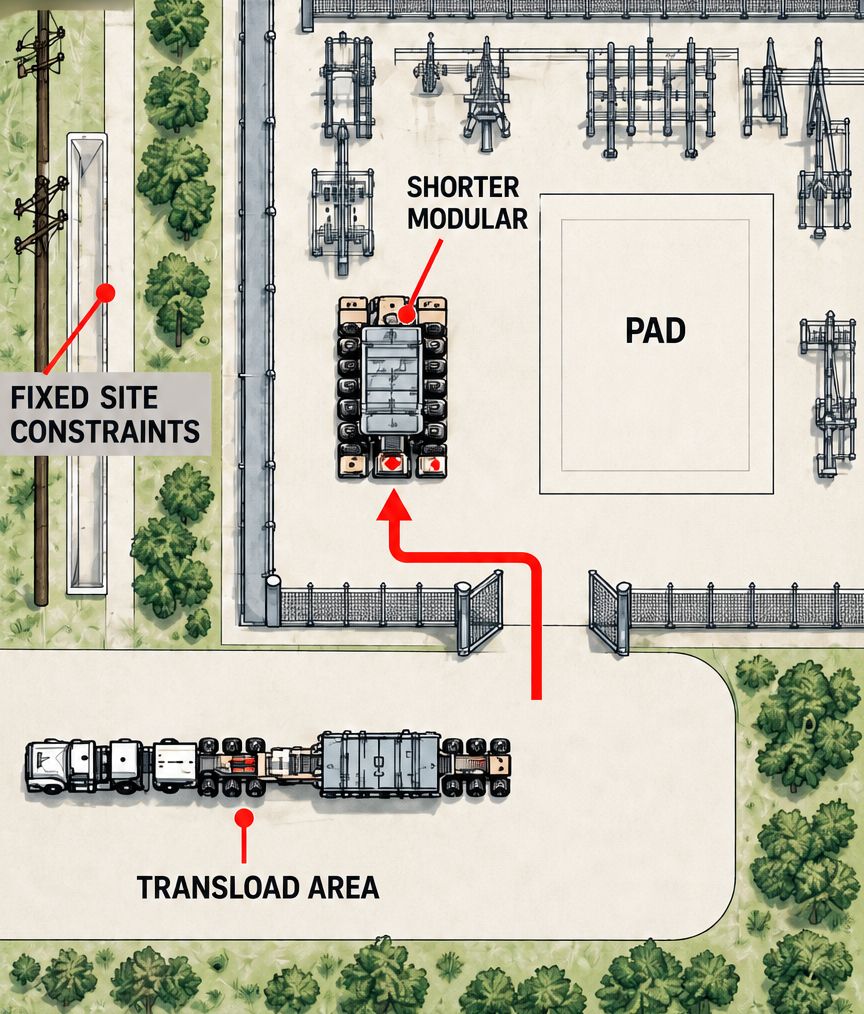
Fixed site constraint
A concrete trench, utility poles and the substation fence restricted the maneuvering space available to the road combination.
Planned site-access configuration
The review called for transloading to a shorter modular combination for the movement toward the transformer pad.
Final access
The report specified 95% ground compaction and required rotation of the unit to achieve the intended orientation before placement.
Offloading plan
Jack & Slide was planned for the transfer to the foundation.
Transport can be requested on its own. Loading at origin, unloading and final placement can be included in the scope or arranged as independent handling services.